Sometimes, I need to filter out real-time logs on server which is not taking part of a log aggregation tool, such as Graylog or ELK.
Sometimes it’s also very convenient and quick to run a command and see live what’s going on.
To see any new line added to a log file, you should already know the tail function:
tail -f /var/log/mail.log
Unfortunately, you won’t be able to use this command with more that on command chained, for instance:
# The following command will work:
tail -f /var/log/mail.log | grep from=

# The one below won't show you an error, but won't display anything as well:
tail -f /var/log/mail.log | grep from= | grep me@domain.com
Some command, like grep, comes with a specific directive that can workaround this issue: –line-buffered
Not all tools have it though, for example, with cut you will have no dice. If only one command you would use is not providing a way to do that, use it at the end.
Let’s make a quick example, if I wan to use two greps command and a cut, I can do:
This will show me the 4 and 5 fields of any new line added to mail.log, which contains the expression “from=”, filtering out any empty sender or root (“from=<>” and “root”). So I will get output like that one:
Often, you will have to deal with strings in your scripts. For instance, parsing Syslog files to find out and graph very specific information. And when it comes to string manipulation, the cut command can be very useful!
Cutting by byte position
This mode will allow you to cut from a position to another, let say between the first and the fourth-byte position. If your string includes a special char that uses more a byte, cutting with this mode can be tricky. As a result, I don’t use that mode, yet it’s good to know for very specific usage:
# This will return M
echo 'My first string' | cut -b 1

# This will return Mf
echo 'My first string' | cut -b 1,4

# This will return My first
echo 'My first string' | cut -b 1-8
Cutting by character
This is the one I use the most, that is the same command but it doesn’t take into account the size of each character, only their position, so no bad surprise:
# This will return M
echo 'My first string' | cut -c 1

# This will return Mf
echo 'My first string' | cut -c 1,4

# This will return My first
echo 'My first string' | cut -c 1-8
Cutting by delimiter
Here comes the real power of cut, using a delimiter made from a single character will allow you to do great things. In addition to that delimiter, you need to provide the field number, see the following to better understand.
Let’s take a more complex example to show you what is possible. Imagine you want to list all the bash used by the users on your system. This information can be found on /etc/password.
First, let see what looks like an entry located in /etc/passwd :
smar:*:101:1:Seb Mar:/home/smar:/usr/bin/zsh
We have 7 fields, the one we want is the last one. All those fields are separated by a semicolon. So, it’s pretty simple “:” will be our delimiter and we will ask for the 7th field:
# This will show you the list of all the shell defined in /etc/passwd
# With redundancy though
cat /etc/passwd | cut -d ':' -f 7
To finish properly our little exercise, let’s filter that to avoid duplicate using sort:
# This will show you the list of all the shell defined in /etc/passwd
# Without duplicates!
cat /etc/passwd | cut -d ':' -f 7 | sort -u
Please note that extracting more than a single field will return the selected fields separated by the same delimiter. For instance:
# The command below will return smar:/usr/bin/zsh
cat "smar:*:101:1:Seb Mar:/home/smar:/usr/bin/zsh" | cut -d ':' -f 1,7
However, if you want to replace this delimiter, you can use the –output-delimiter directive:
# The command below will return smar,/usr/bin/zsh
cat "smar:*:101:1:Seb Mar:/home/smar:/usr/bin/zsh" | cut -d ':' -f 1,7 --output-delimiter=','
Using complement to reverse the result
If you need the opposite result of your filter, cut provide the –complement directive to achieve that:
# While this will return My first
echo 'My first string' | cut -c 1-8

# This will return string
echo 'My first string' | cut -c 1-8 --complement
I hope those tips will help you scripting more efficiently!
This post is a sticky note about how to configure your workstation in order to use Terraform with Microsoft Azure.
Configure Azure CLI on your station
First of all, you need to install this client to be able to connect to your Azure subscription. To do so, download the software from the Microsoft website. For Windows users, it’s a simple MSI package to install, then run a PowerShell console to run the login command as follow:
az login
This command will open your browser, and ask you to log in to your Azure account.
Once’s validated, you will be able to see your subscriptions within the PowerShell console. Take note of the tenant ID and the ID of the subscription you want to use further if you have many subscriptions as below:
For information, you can use the command below to see your subscriptions:
az account list
That’s all for the Azure client, pretty simple, isn’t it?
Configuring Terraform on your station
This step is easy too, really, just browse Terraform web page to get the version that suits you. Keep in mind that, depending on the cloud provider (Azure in that very case), a version can or cannot be compatible with the provider. At this time, I’m using Terraform v0.12.21
OK, so unpack the archive to the folder of your choice. From here you can use the previous PowerShell console and browse to this folder. This is optional, but if you want to be able to run terraform from everywhere, you will need to deal with your environment variables. I won’t describe the process in this post though.
Open the Terraform folder with your file browser, then create inside a file called main.tf This file will contain the very basic information in order to connect to Azure:
The first declaration is about the provider required to connect and manage Azure cloud services. Terraform strongly recommend using it to pin the version of the Provider being used. So this value will change in the future. Then set the subscription_id and tenant_id variables with the information gathered earlier. The skip_provider_registration is set to true here due to some restricted permissions I have, that might not be the case for you though.
If you have already created a resource group, you can also add the following declaration to your file:
Just keep in mind that Terraform, sadly, won’t import the resources you defined automatically. You will have to do that manually.
Now, run the following command to initialize Terraform, making it downloading the provider defined and creating the first local state file.
terraform.exe init

terraform.exe init

Initializing the backend...

Successfully configured the backend "azurerm"! Terraform will automatically
use this backend unless the backend configuration changes.

Initializing provider plugins...
- Checking for available provider plugins...
- Downloading plugin for provider "azurerm" (hashicorp/azurerm) 1.44.0...

Terraform has been successfully initialized!

You may now begin working with Terraform. Try running "terraform plan" to see
any changes that are required for your infrastructure. All Terraform commands
should now work.

If you ever set or change modules or backend configuration for Terraform,
rerun this command to reinitialize your working directory. If you forget, other
commands will detect it and remind you to do so if necessary.
Storing Terraform State in an Azure storage
You should see in the Terraform folder a file called terraform.tfstate which contains a representation of what you have in Azure.
If you are planning to work with a team, you should use a common file shared across your people. For that, we are going to create a storage account and a container to put this terraform.tfstate file in it. Note that Azure is handling will manage the lock on that file automatically, avoiding multiple access at the same time from your coworkers. To do so, create a storage-accounts.tf file (choose the name that suits you the best):
Here, we have defined a storage account and a container within, I let you check the documentation about the replication type.
Now, let’s create those resources with the simple command below:
terraform.exe apply
This command will check on Azure to see which change (update, creation or deletion) it has to do. In the end, it will show you the plan, asking you for a yes in order to apply. Type yes and see the magic happens.
Now, you have a container to put your tf file in, however, we need to update our main.tf file in order to use it. Edit the file by adding the following content after the provider definition:
Today, I would like to summarize some of the commands I usually use when I want to check the public IP address used by a server when connected through SSH. It’s a very simple post, yet I think that can help people at some point:
Using curl, the easiest way in my opinion:
curl ifconfig.me
Using dig and OpenDNS, way too complicated if you ask me:
Using wget, if curl is not available (that should never happen though), the file will be downloaded (index.html). You might use a command with pipe in order to get the IP address from the downloaded content:
Before moving further, at this time, there is no way to configure your Azure network to push another gateway that the Azure default to your machine, you can create route for the next-hop, but those routes can’t override the default gateway. Long story short, you will have to manually configure the default gateway of your servers to make them use your Fortigate as their next-hop.
First, you will need to know the different subnets that you will use, in this example, I will use four subnets:
10.62.34.240/28, this one will be used for the WAN connection
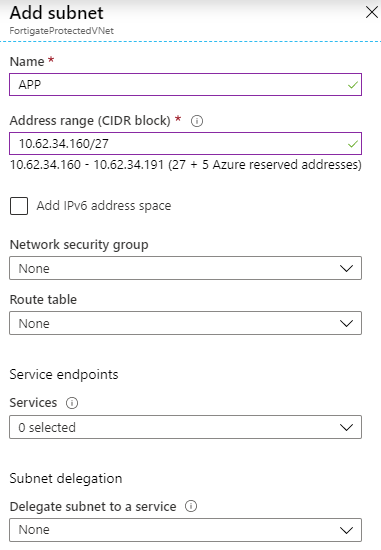
10.62.34.160/27, this one will be used to connect machines to port1
10.62.34.128/27, this one for port2
10.62.34.192/28, and the last one for port3
Note that, depending on your interfaces need, you will have to choose a different appliance from the Microsoft pay-as-you-go catalogue. In order to create that appliance with 4 interfaces, I had to pick the Standard F4 (4 vcpus, 8 GiB memory) size. The virtual network and two subnets will be created during the creation process, call the first WAN and the second WEB or whatever makes sense for your port2.
So, you have created your subnets, then your appliance (FGT), and it’s now time to configure your network, before powering on the FGT. Unfortunately, it should have been turned on right after its creation, so shut it down for now.
Configuring the existing subnets
Edit the virtual network created by the wizard, at the time I’m writing this, it’s called FortigateProtectedVNet. You should see your two subnets:
We have to remove the Network Security Group (NSG) assigned by default, except for the WAN subnet, because we want to manage the security through the Fortigate itself. We could have choose to use them as an additional security layer, but in order to keep things simple here, we won’t discuss that part.
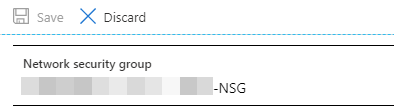
For each existing subnet, click on Network Security Group:
Click on the edit button, then on the NSG assigned:
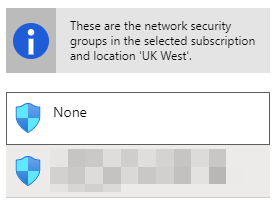
Choose none in the left list:
On the next screen, clic save to confirm the change, repeat the operation for the second subnet.
Adding the other two subnets
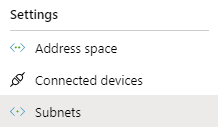
We need to create the other two subnets. Go back to the FortigateProtectedVNet object, and within the left menu, click Subnets:
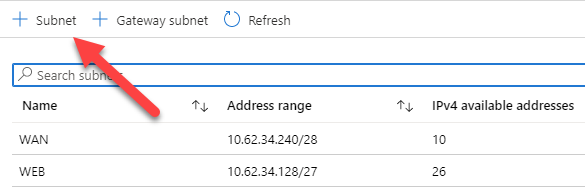
Click the + Subnet button to add a new one:
Add your new subnets, don’t add a NSG or a route table yet:
Adding and configuring routing tables
In order to tell your future VMs which routes using to access ressources, Azure is using routing table. These routing tables are linked to one or many subnets.
During the creation of your Fortigate, two subnets were created along two routing tables. We have to configure them (especially the second one) and add two new routing tables for the new subnets we have created above.
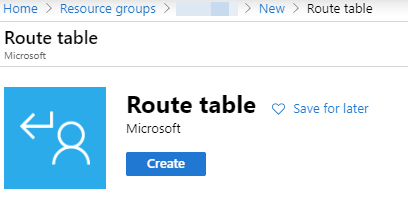
Go to your ressource group, then add a new route table object:
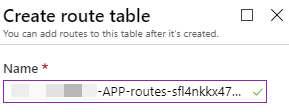
For the naming, I usually use the same name of the automated generated routes, updating only the subnet part, for instance:
Leave the virtual network route propagation enabled.
Once your new routes have been created, we need to configure them. The WAN routes doesn’t need to be updated. However, for all the other routes, do the following:
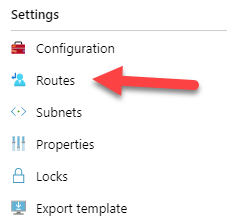
Click on the route table you want to configure, then Routes:
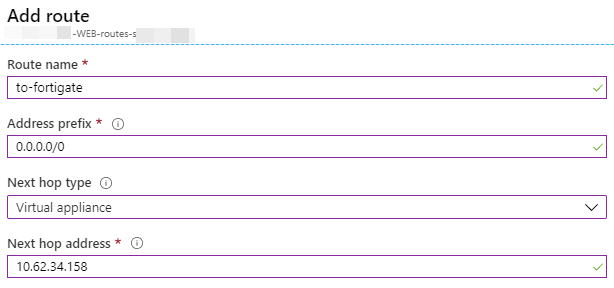
Remove all the current routes defined. Then create this following route to tell your VM to use the Fortigate interface as the next hop:
The next hop must match with the future IP of the Fortigate interface connected to that specific subnet. T
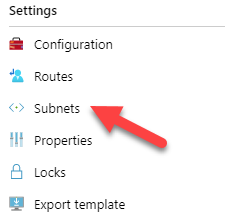
Once the route is added, it’s time to associate the subnet, click on Subnets on the left side:
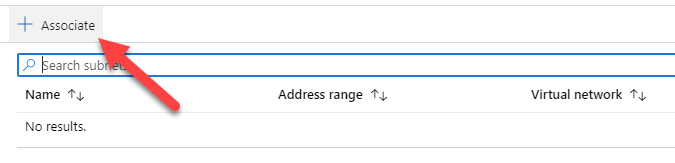
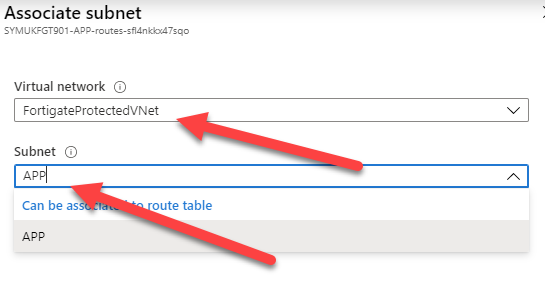
Click the Associate button, and select the proper network/subnet:
Do the same thing for the other subnets (Except for WAN!)
Add new interfaces to the Fortigate
The current FGT has only two interfaces, turn it off then open its object in order to add two new interfaces.
Got to Networking:
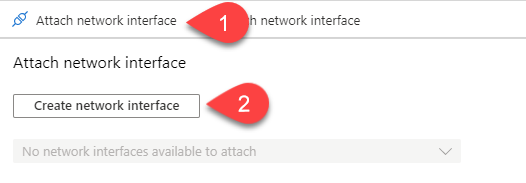
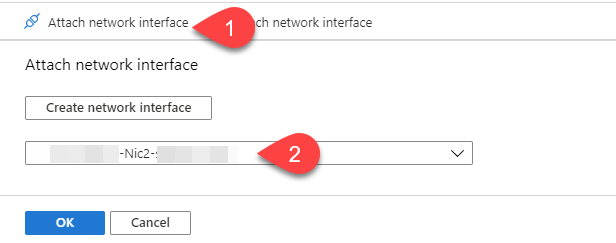
Click Attach network interface:
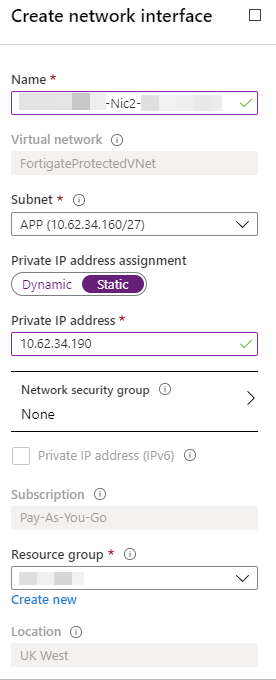
Use the same pattern for the name, replacing the Nic part with the next number (Should be 2 and 3 for APP and DB). Check Static to set your Fortigate interface IP:
The interface will be created. But you still need to attach it manually on the next screen:
Repeat these operations for the last Nic3 interface.
IP forwarding and
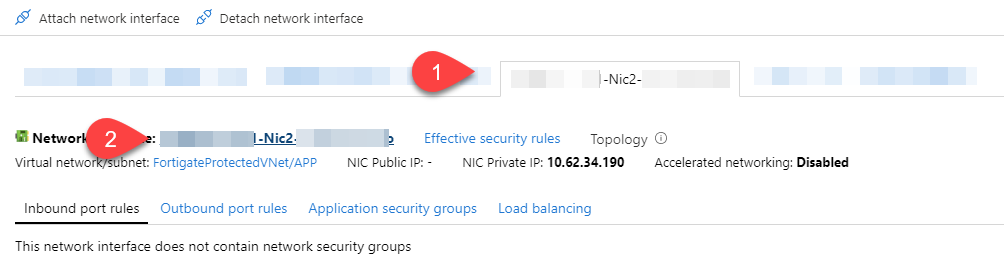
We now need to configure those two new interfaces, for that, click on the interface tab, then on the interface name (#2 on the capture below) to access the configuration pane:
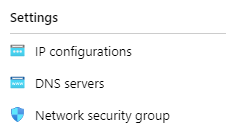
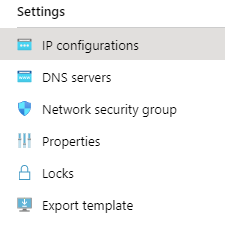
From here, click on IP configurations:
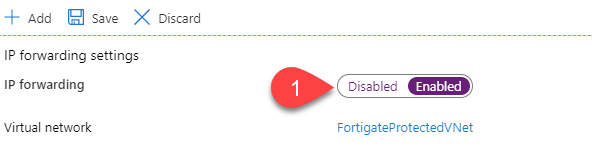
And enable the IP forwarding feature:
Save, and do the same thing with the last interface (Nic3).
In order to improve performances, we would like to enable accelerated networking, to do so, we need the FGT to be off (That should be the case at this stage) and then we need to run some commands.
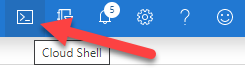
Click on the Cloud Shell icon on the top right toolbar:
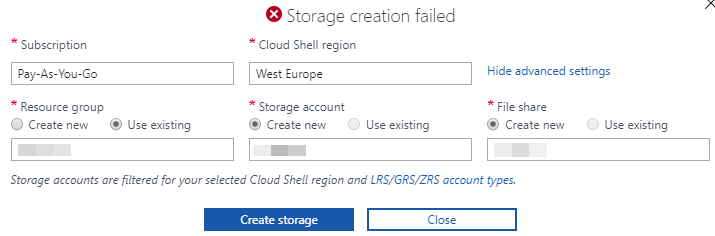
Choose Powershell when asked in the console area, down the window, create a storage (That’s mandatory). If you got a permission issue, click the Advanced Options and from there, create it:
Once connected to the Powershell console, run the following command to enable accelerated networking:
az network nic update --name Nic2 --resource-group YourRessourceGroupName --accelerated-networking true
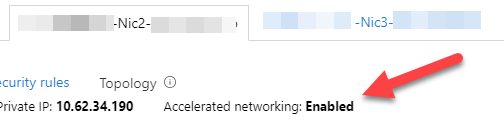
Exit the console, refresh the whole portal, and you should now see the following:
Accessing your Fortigate
You can now start your FGT, and the use the public IP address created by the wizard to access the portal, using HTTPS.
If you have any issue accessing the interface of your Fortigate, ensure that the NSG created by default still associated to the Nic0 interface, you should have this:
Sending emails is always something tricky to deal with, every ISP, antivirus, security are working on their own solution to fight scams, spam, fishing, etc. That makes difficult to have a proper SMTP server configured and trusted by all those third parties.
This post is not about what you should configure in order to your server to be trusted, but a website you can use to see what you have missed or well configured about it.
That’s being said, please check the following before give it a try:
Ensure the public IP address used by your server to send emails is defined in the SPF record of the DNS server in charge of your domain;
Ensure that a reverse DNS is also configured, binding this public IP address to the same name used by your SMTPS server (Hostname)
Ensure you have configured DKIM
Ensure your public IP address is not blacklisted
Then, you can go to this website, https://www.mail-tester.com/ . From here, you will get a temporary email address to send an email to, then by clicking on th button, it will display a very detailed amount of information about your SMTP server configuration
That’s very handy to check the basic of sending emails on Internet!
A part of my daily job is to improve application security, at large. Doing so, I often have to deal with cipher suites hardening.
This task is not complex at all, yet you have to manage different libraries that are using different naming conventions (RFC, GnuTLS, OpenSSL, etc.). You can always count on the documentation or your favorite search engine, nonetheless, depending on their quality, that will make you waste a lot of time.
Fortunately, I found a very handy website, created by Hans Christian Rudolph and Nils Grundmann, which gives you much information about those libraries, cipher suites, protocols, etc. It also offers an API, yet that still a work in progress. Long story short, anytime you need to deal with cipher suite, you should take a look at it:
Windows Admin Center (WAC) is a new way introduced by Microsoft to manage your servers, workstations, and clusters.
Using TLS between WAC gateway and servers
WAC gateway is the tool you install on a server or workstation to act as a gateway between administrators and servers/stations/clusters. During its installation, you will be asked to choose between regular or encrypted communication between your assets and this gateway. As we should all do, I did choose encrypted communication.
Choosing TLS implies you to deploy a valid certificate for your server to encrypt its gateway’s connection. This certificate must be trusted by your gateway machine obviously. Here the process to do it, using a self-signed one though.
First, if its a workstation and not a server, you need to enable PSRemoting
Enable-PSRemoting
Then allow port 5986 between your server and the gateway (This must be done on the server, because installing WAC on your gateway should have fixed that already.
If your organization has a PKI infrastructure, you will need to configure it to delivers certificates to your servers and workstations.
Configure your subordinate CA to delivers WinRM certificates
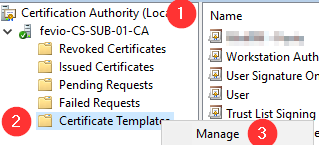
Open Certification Authority on your Subordinate CA and go To Certificate Templates Management
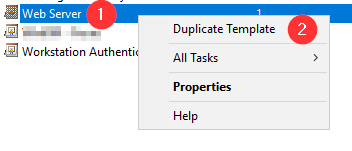
Duplicate the Web Server template
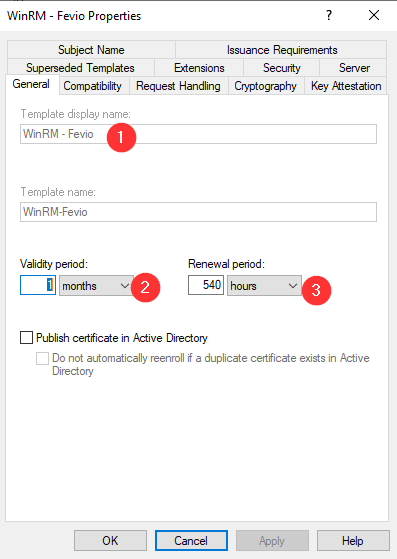
Set a name (Here it’s an existing template and that’s why it’s grayed out) and a validity period (This setting is up to you)
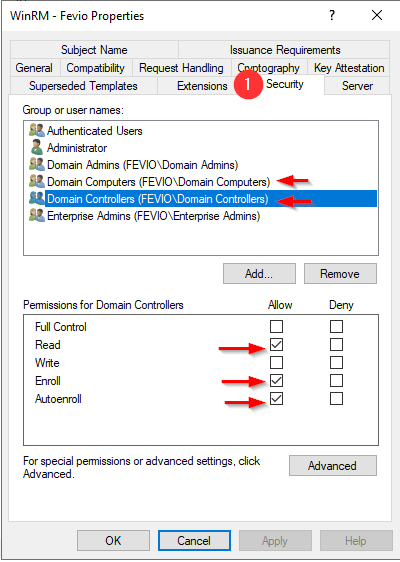
On the security tab, add the groups of devices you want to allow to enroll. In my example, I have added Domains Controller and Computers, so I can both manage my DC servers and my workstations through WAC.
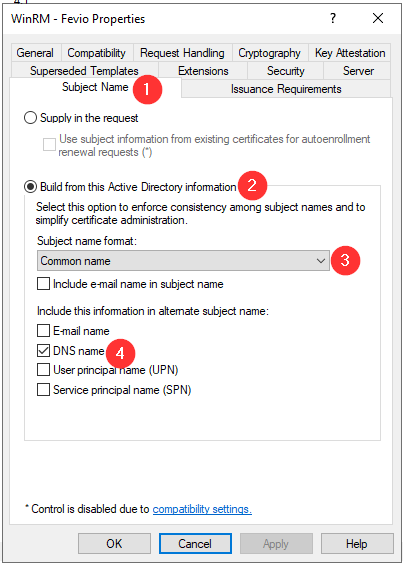
Setup the subject name as above
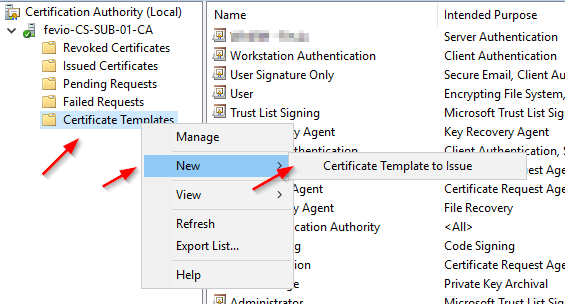
Close the Template manager and add the new template to your Certificate templates to make it available on this CA
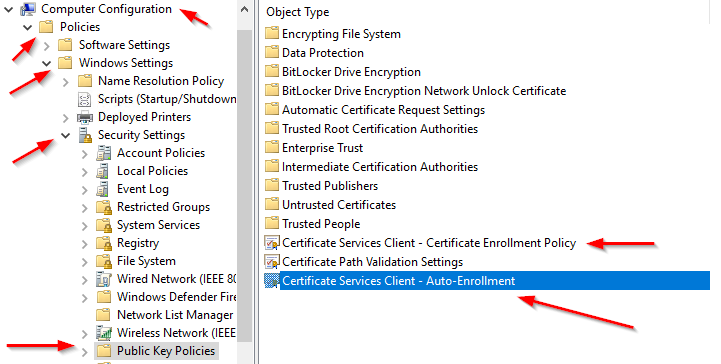
Go to one of your Directory Controller and confirm that a GPO exists with the following Security policies enabled and properly configured
Refresh the GPO on one of the server you want to remotely manage:
gpupdate /force
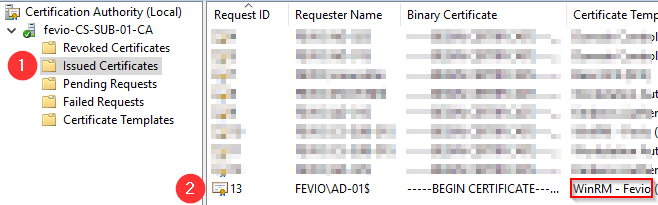
Check on the subordinate CA if the certificate has been issued properly, using the MMC view:
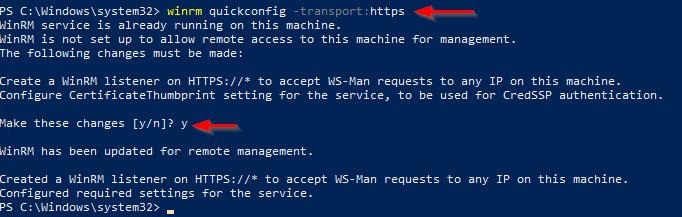
Go back on the server you to remotely access using WAC, and run with an elevated PowerShell the following command to create an HTTPS listener using the new certificate:
winrm quickconfig -transport:https
Note that you can run the command above through a remote Powershell session!
You should end with a positive message, and from there, good to connect using Windows Admin Center
Without an internal PKI
Without a PKI, you will have to generate a self-signed certificate then import it on your WAC gateway, that’s a bit dirty but if you just want to try, go ahead with the following:
Create a self-signed certificate (update the FQDN part, like myad-001.fevio.fr):


 Before moving further, at this time, there is no way to configure your Azure network to push another gateway that the Azure default to your machine, you can create route for the next-hop, but those routes can’t override the default gateway. Long story short, you will have to manually configure the default gateway of your servers to make them use your Fortigate as their next-hop.